Health and Safety Policy for a Removal Company
 Health and safety is central to every successful move. For a removal company, protecting staff, customers, property, and the public means planning carefully, working methodically, and maintaining high standards at every stage of the job. This policy sets out the principles that guide safe working practices across packing, lifting, loading, transporting, and unpacking. It applies to all team members, subcontractors, and anyone involved in the moving process.
The aim of this removals health and safety policy is to reduce the risk of injury, damage, and disruption. A safe move depends on awareness, communication, and consistent use of safe systems of work. Every employee is expected to follow instructions, use equipment properly, and report hazards immediately. The company is committed to creating a working environment where safety is treated as a shared responsibility and where prevention comes before reaction.
 Before any move begins, a suitable risk assessment must be completed. This includes identifying hazards such as heavy lifting, sharp objects, poor lighting, slippery surfaces, traffic movements, and unstable furniture. A removal service must also consider access routes, staircases, parking arrangements, and the condition of items being handled. Where needed, controls will be introduced, such as additional staff, mechanical aids, protective materials, or revised work methods.
All workers must receive clear information and appropriate training. Training should cover manual handling, safe use of tools and moving equipment, correct packing methods, emergency procedures, and the reporting of accidents or near misses. New or temporary staff must not be asked to carry out tasks beyond their competence. Experienced supervisors should monitor work closely and provide support when complex or high-risk tasks arise. Good supervision helps maintain safe standards and encourages confidence on site.
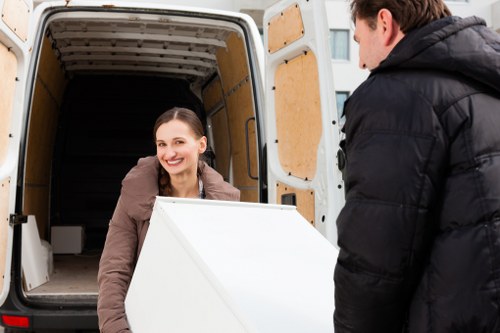
Manual handling is one of the most important areas of control in the removal company environment. Staff should avoid lifting loads that are too heavy, awkward, or poorly balanced. When possible, items should be broken down into smaller loads, lifted by two or more people, or moved with the aid of trolleys, straps, dollies, or ramps. Proper posture, bent knees, and secure footing are essential. Workers must never twist while carrying a load, and they should stop if a lift feels unsafe.
 Personal protective equipment must be selected and used where required. This may include safety gloves, high-visibility clothing, protective footwear, and back support where appropriate. Clothing should allow free movement and reduce the chance of trips or snags. All equipment used in a removals company operation must be maintained in good condition and inspected regularly. Damaged items should be removed from use until repaired or replaced.
Vehicles and loading areas must be managed with care. Drivers should ensure that vehicles are roadworthy, loaded safely, and secured before departure. Loads must be distributed to prevent shifting during transit, and items should be strapped or padded where necessary. Anyone loading or unloading a vehicle should remain alert to moving vehicles, reversing manoeuvres, and uneven surfaces. A strong safety culture in a removals company Harrow operation depends on keeping work areas orderly and free from unnecessary obstacles.
Safe handling of customer property is also a key part of the policy. Fragile, valuable, or hazardous items require special attention and should be identified in advance. Glass, mirrors, electronics, and antiques should be packed with suitable materials and labelled clearly. If a potentially dangerous item is discovered, such as chemicals, pressurised containers, or damaged electrical goods, the situation must be assessed before work continues. Nothing should be moved if it could put people at risk.
Accident reporting and emergency response procedures must be understood by everyone. Any injury, spill, collision, equipment failure, or near miss should be reported immediately to a supervisor. First aid resources must be available, and emergency exits, fire points, and assembly arrangements must be kept clear. If a serious incident occurs, work should stop until the area is made safe. Learning from incidents helps improve future practice and strengthens the overall safety record of the removal company.
Risk control extends beyond physical safety and includes fatigue management, communication, and wellbeing. Removal work can be demanding, especially during busy periods or in difficult access conditions. Breaks should be planned appropriately, and workers should be encouraged to speak up if they feel unwell or unable to complete a task safely. Clear instructions and respectful teamwork reduce mistakes and support a steady pace of work. A calm, organised approach is one of the best protections against accidents.
Environmental conditions must also be considered. Wet weather, ice, heat, and low light can all affect safe working. Outdoor paths, loading bays, and entrances should be checked before carrying items. Where necessary, mats, lighting, gritting, or other controls should be used to reduce slips and trips. The removal service should adapt to changing conditions rather than continue a task unsafely. Flexibility and good judgment are essential features of professional moving work.
 Every team member is expected to contribute to continuous improvement. Supervisors should review work practices, equipment condition, and incident trends so that lessons are built into future operations. Managers will update this policy when needed to reflect new risks, better methods, or changes in company procedures. The objective is simple: to deliver a reliable removal company service while protecting people, property, and reputation.
 This policy confirms the company’s commitment to safe, responsible, and professional working practices. By planning ahead, using the right equipment, providing proper training, and maintaining clear communication, the removals company can complete moves efficiently without compromising safety. Health and safety is not an extra step; it is part of every task, from the first lift to the final placement of the last item.